Most agencies don’t lose margin because of one bad commercial decision. More often, the decisions are perfectly reasonable at the time. A client asks for another revision, so the account director agrees to it. A project needs a little more senior input, so someone makes the time available. A small change gets absorbed rather than becoming a conversation about scope.
The problem is when the same thing keeps happening.
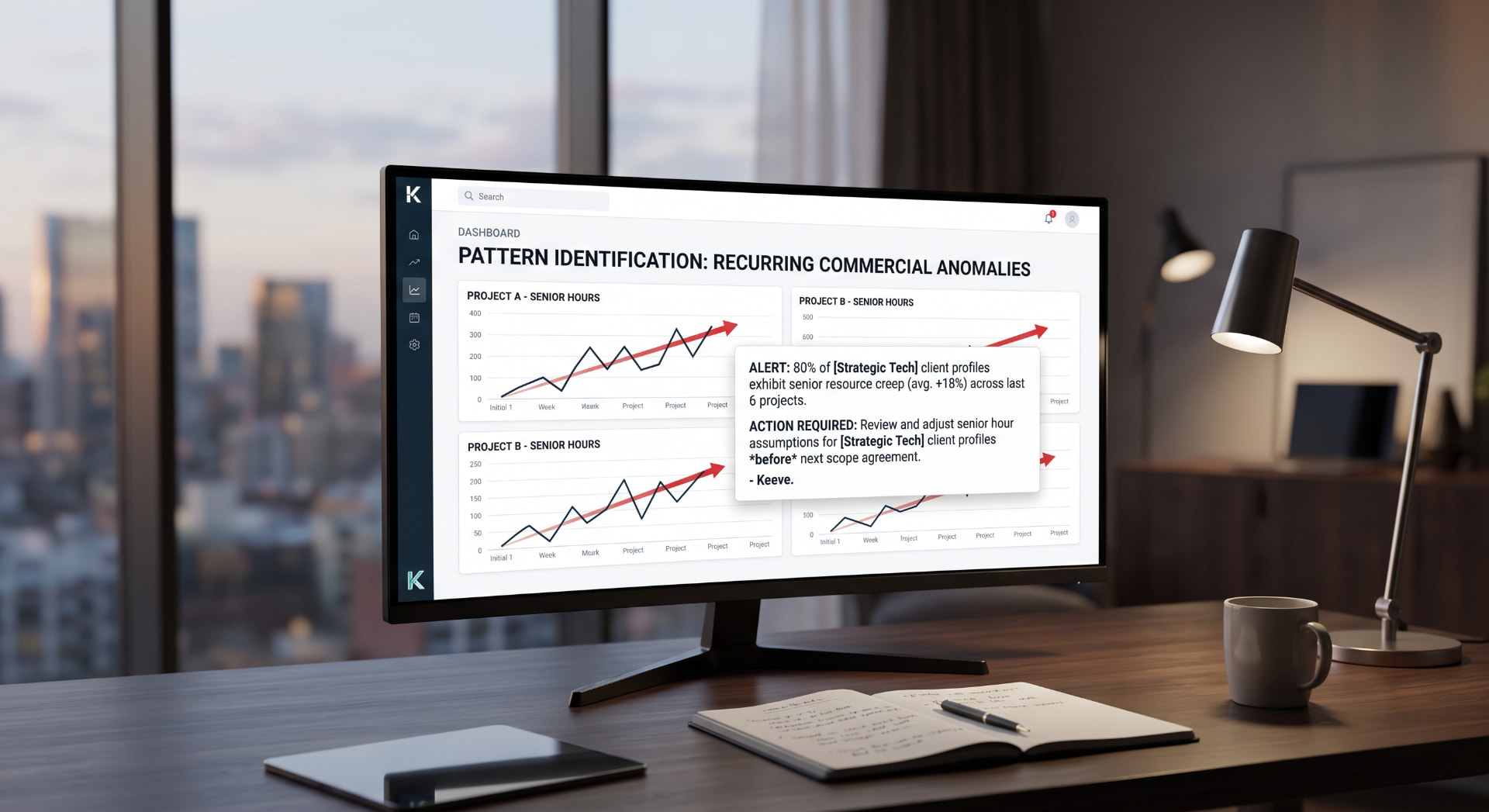
Imagine an agency has delivered several projects that looked properly scoped but consistently required more senior involvement than the original estimate allowed for. The individual projects may each have had a reasonable explanation, but taken together they reveal something important about that type of work.
Unless the agency recognises that pattern and changes its assumptions, the next project will still be priced in exactly the same way. That’s where the commercial problem lies, not in any individual decision, but in failing to turn repeated experience into a better decision next time.
This is the kind of pattern that conventional agency reporting struggles to explain. Most systems can tell you what happened to an individual project, but they can’t tell you why it happened. And they certainly can’t investigate why the same pattern keeps appearing across different projects, clients and circumstances.
The evidence is already there
The information needed to spot these patterns usually exists across the agency:
- Scopes: show what was expected
- Timesheets and project data: show what actually happened
- Financial data: shows the financial outcome
- Communications and emails: provide context around changes and decisions
Looking at one of those sources might tell you something useful. Looking across them tells you something far more important: whether the same commercial pattern keeps appearing.
Perhaps a particular type of work repeatedly consumes more resources than expected. Perhaps projects with a certain client profile consistently require extra management. Those aren’t just project findings. They are insights into your commercial model.
The value is knowing what to do about it
Once a pattern is identified, the useful question isn’t simply why margin was lost. It’s what the agency should do differently next time.
A traditional post-mortem might tell you that a project used more senior resources than planned. That’s useful information, but it is still just a description of what happened.
Keeve’s forensic analysis goes further. It looks across previous projects to understand why the same issue keeps occurring, identifies the conditions associated with it and turns that into a practical recommendation for future work:
- If comparable projects repeatedly require additional senior involvement, the next scope should account for it upfront.
- If a particular type of client consistently generates scope creep, the agency should know that before agreeing to terms.
The objective isn’t another report explaining what happened. It’s a recommendation for what to do differently before it happens again. That’s the difference between simple reporting and commercial intelligence.